Getting Stuck In
The messy, muddy, wonderful reality of turning a farm into a nature reserve. Mostly involving diggers, mud, and optimism.
Diesel Beavers
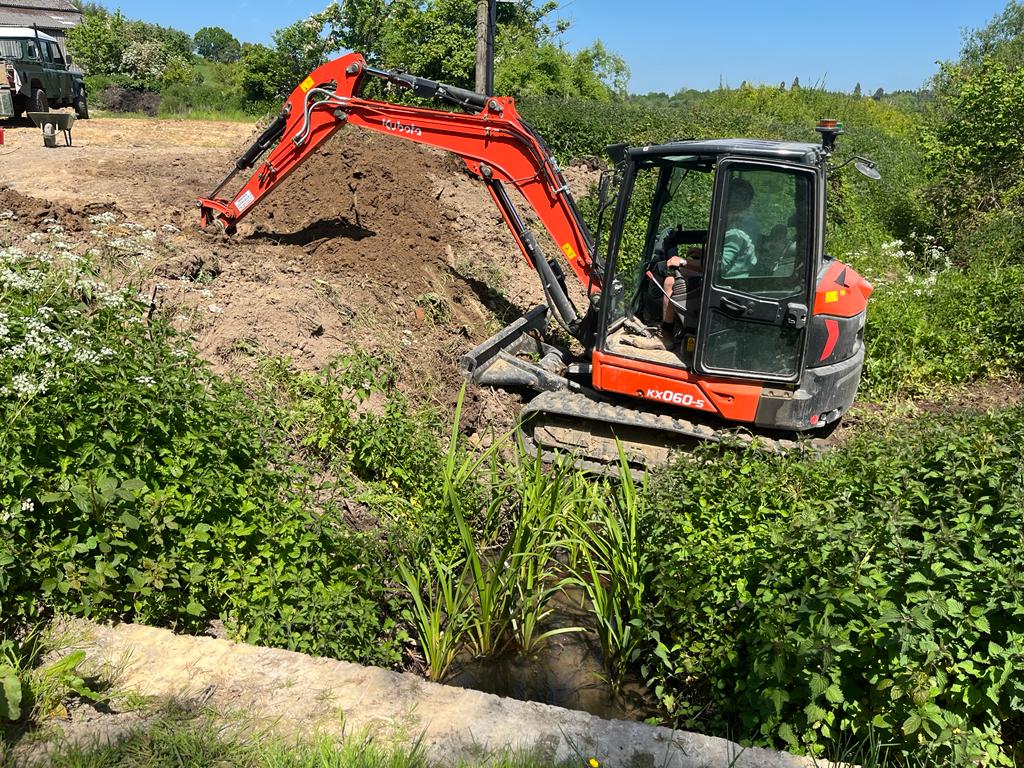
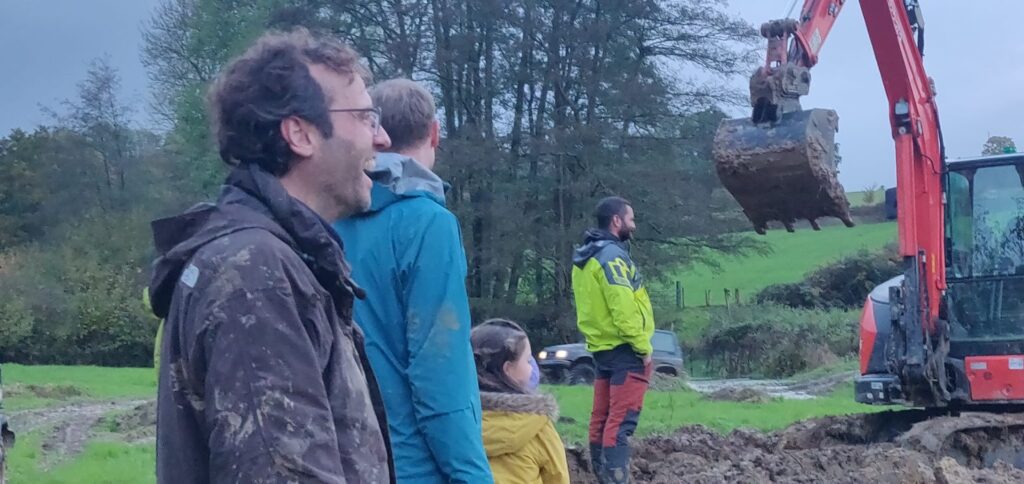
Since there are no longer beavers managing the waterways at Owletts Farm, we've had to resort to mechanical means. Our "diesel beavers" — diggers and dumpers doing the work that nature's engineers used to do — have been reshaping the wetlands, creating ponds and scrapes, and reconnecting the stream with its floodplain.
It's noisy, it's muddy, and the machines get stuck with alarming regularity. But the results are extraordinary. Within months of the earthworks, water starts finding its way into the new channels, wetland plants colonise, and wildlife moves in. We're doing the heavy lifting so nature can take over.
One day, we'd love to have real beavers back. Lots to consider before that happens — but the landscape we're building would be perfect for them.
River Re-Wiggling
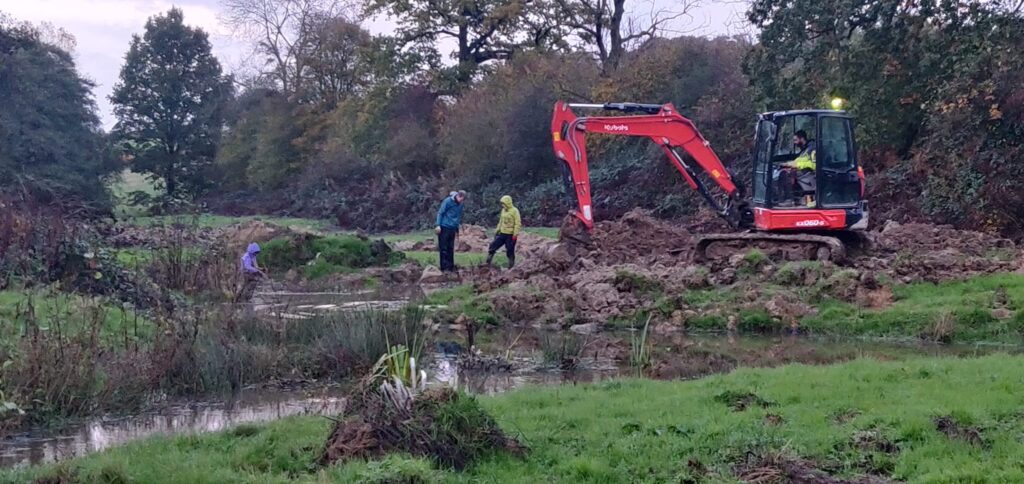
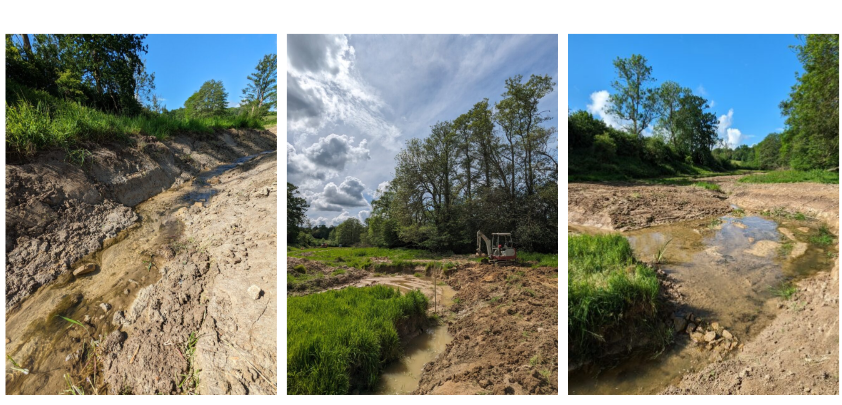
The stream through the farm had been straightened into a drainage ditch at some point in the last century — dark, narrow, and fast. Not much good for anything except getting water off the land as quickly as possible.
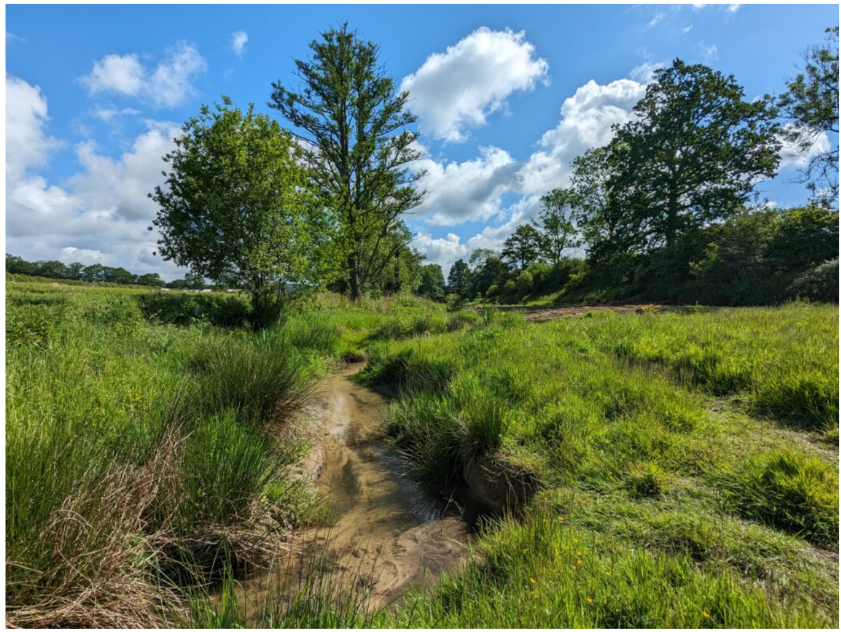
Volunteers James and David joined us to complete the re-wiggling. The stream now splits into two paths: the original straight ditch and a new meandering route. We've slowed the flow with leaky dams and scattered wildflower seed along the banks — water avens, yellow-flag iris, ragged robin, meadowsweet.
Next up: native riparian saplings (willow and alder) to stabilise the banks, a head start for the reed beds, and a ford crossing. We're excited to see how nature takes over this summer.
Making Hay
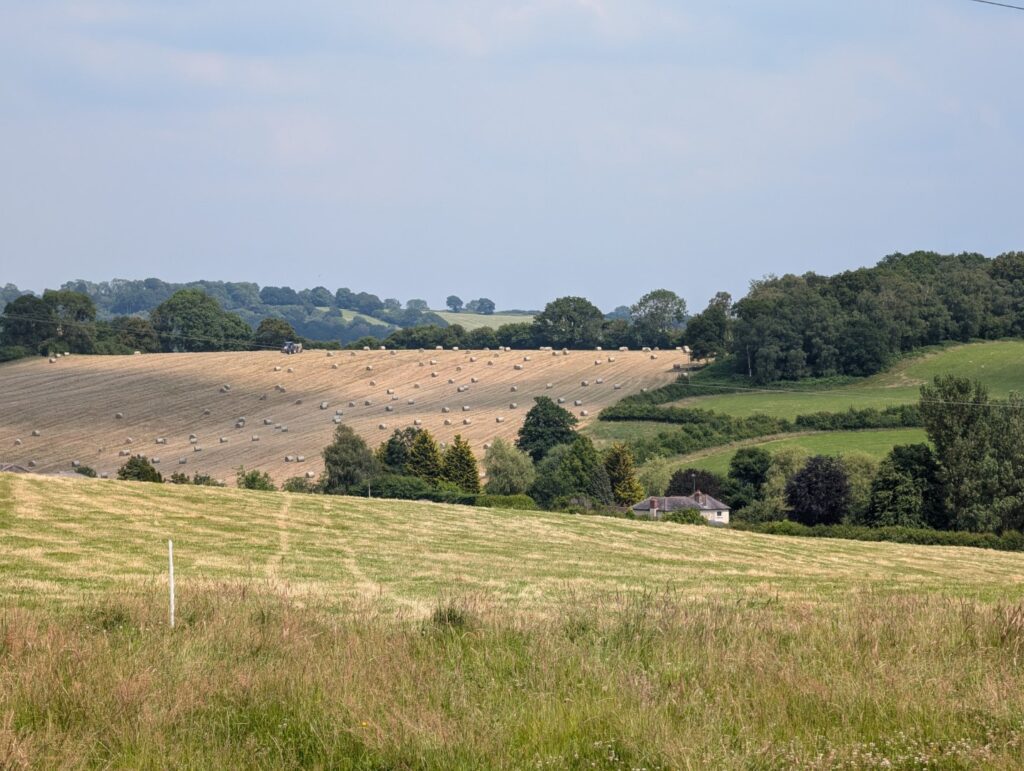
Hay-making at Owletts isn't just about producing feed — it's a restoration tool. By cutting and removing hay, we're taking nutrients out of the soil. That sounds counterintuitive, but it starves the vigorous commercial grasses and makes space for the wildflowers and fine grasses that create species-rich meadow.
No chemicals, no fertiliser. Just cut, turn, bale, and cart. It's one of those jobs that connects you to every farming generation that's ever worked this land.
Scrub, Glorious Scrub
Scrub — that tangled mix of hawthorn, blackthorn, bramble, and willow — is one of the most undervalued habitats in the British countryside. It's been cleared off farmland for decades. We're putting it back.
Over 36 hectares, we're letting hedgerow trees spread outward, planting pioneer scrub, and protecting the patches that survived. It might look scruffy. It is scruffy. That's the point. Scrub provides dense nesting cover, fruit for migrating birds in autumn, and the structural complexity that farmland desperately lacks.
Turtle doves, nightingales, yellowhammers — all of them depend on this kind of habitat. We're building the conditions for their return.
Reading the Land with LiDAR
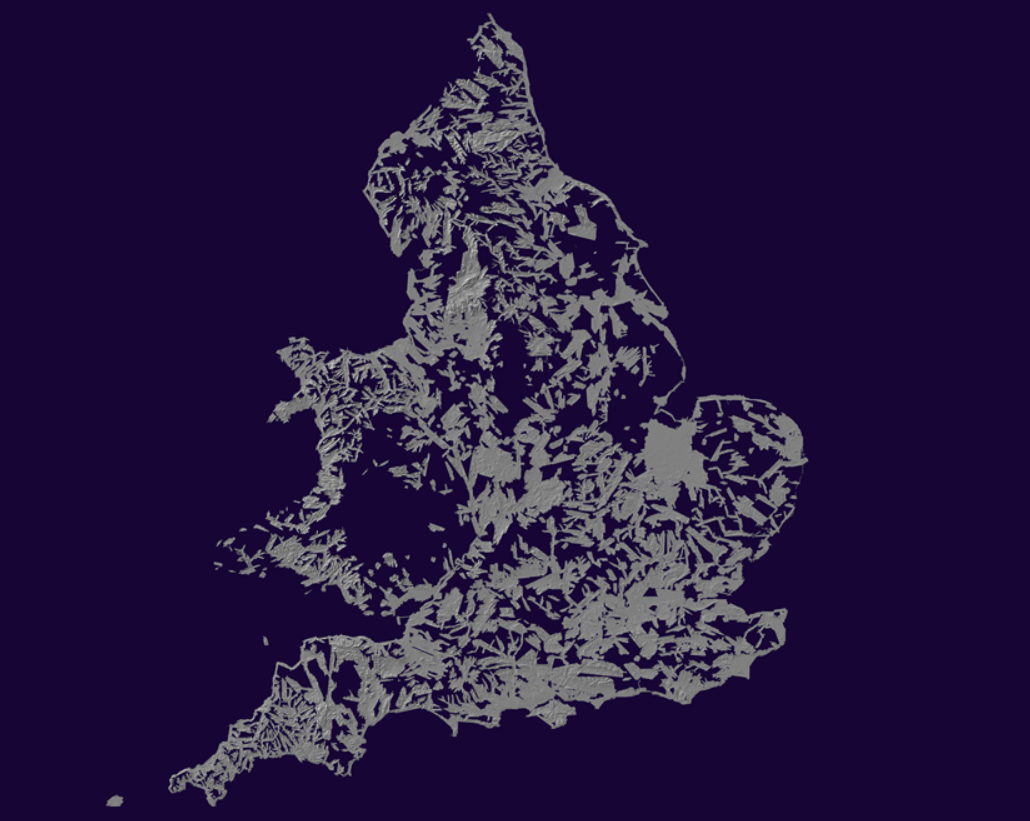
One of the most fascinating tools we've used is LiDAR — laser scanning from aircraft that maps the ground surface at incredibly high resolution. Strip away the trees and vegetation, and suddenly you can see features that have been invisible for centuries.
We've found traces of Roman ironworking, medieval field boundaries, and the ghosts of Latrobe's original parkland design from the 1790s. It's like having X-ray vision for the landscape. And it's all freely available from DEFRA — you can do this for your own land too.
The Market Garden
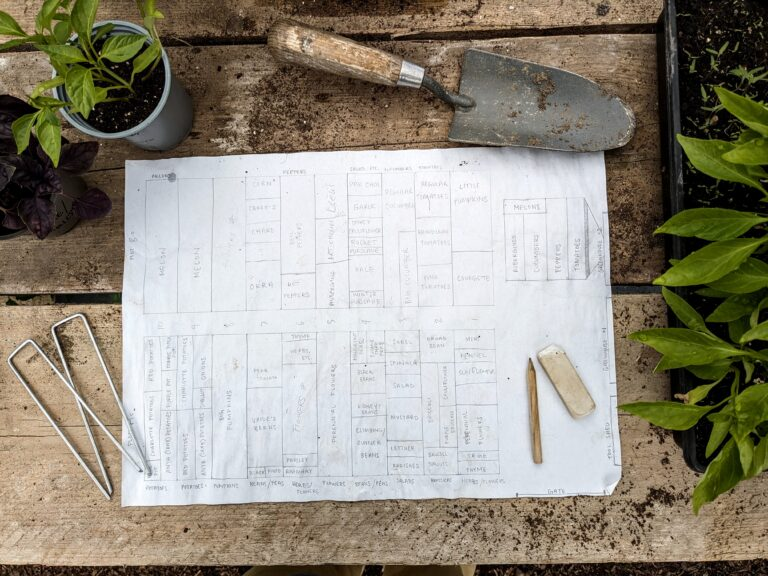
Completed in early 2024, our market garden is the food-production heart of the farm. Small-scale, intensive, chemical-free horticulture for local sale. Seasonal vegetables and salads, grown with care.
It's a reminder that nature restoration and food production aren't opposites. The garden sits within the wider landscape and benefits from the pollinators, the pest-eating birds, and the healthy soil that the restoration is creating around it.
Want to Get Stuck In?
We run volunteer days throughout the year — tree planting, pond digging, hedge laying, and the occasional bout of diesel-beavering. If you fancy getting muddy in a good cause, get in touch.